
Can What You Drink Affect Weight Loss? The Hidden Calories Undoing All Your Hard Work

Updated: Aug 27
Smart Health Key 9/12 – Water And Lower KJ Beverages
You can eat healthy meals all day long... and still struggle to lose weight because of what you're drinking.
Drinks are one of the most overlooked reasons people battle with weight, blood sugar, high cholesterol, and high blood pressure.
Most people pay close attention to what's on their plate, but barely think about what's in their glass... A soft drink here. A fruit juice there. A couple of coffees with 2 teaspoons of sugar. An energy drink to fight the afternoon slump. A few drinks over the weekend.
Individually they don't seem like a big deal. But together? They can quietly add hundreds — sometimes thousands — of extra kilojoules to your week without filling you up.
One of the simplest ways to improve your health is to become more intentional about what you drink.
Water should always be your first choice
Your body depends on fluids to function properly and actually needs water to be able to burn fat. Even mild dehydration can leave you feeling tired, foggy, irritable and struggling to concentrate.
Water is still the best everyday drink. It hydrates your body without adding sugar or unnecessary kilojoules. Here's an easy guide: you need as many glasses of water a day as 10% of your weight. Thus, if you weight 60kg, you need at least 6 glasses of water per day, 80kg, at least 8 glasses of water per day, etc.
But let's be realistic.
Most people enjoy tea, coffee, juice or the occasional soda too. The goal isn't perfection, but making smarter choices more often.
Liquid kilojoules are surprisingly easy to overlook
Unlike food, drinks usually don't make you feel full. That means it's incredibly easy to consume large amounts of energy without even noticing.
Many people struggle to lose weight not because they eat too much food...
...but because they drink too many kilojoules.
Making a few simple swaps can have a surprisingly big effect over time.
Soft drinks: lots of sugar, very little nutrition
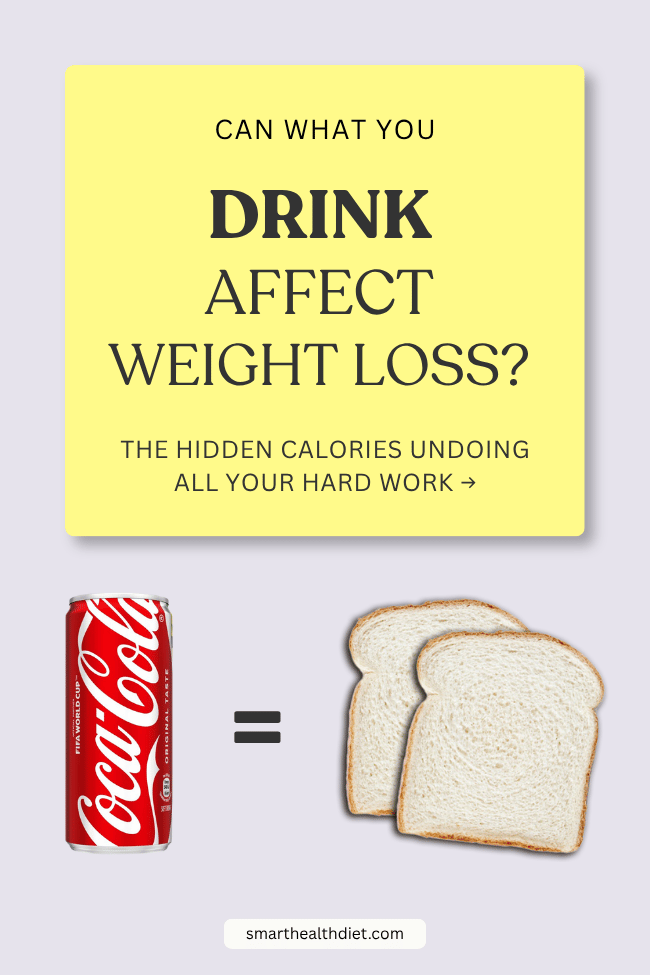
Regular soft drinks like Coke, Mountain Dew, Fanta, and similar beverages are loaded with sugar. A single 340 ml can typically contains around 600 kJ — roughly the same energy as two slices of bread. And even worse, a 500ml bottle contains around 900 kJ, roughly the same energy as 3 slices of bread.
Have two cans every day without reducing your food intake or increasing your activity levels, and those extra kilojoules could potentially contribute to around 6 kg of body fat over a year, thus 1/2 kg per month.
Soft drinks and offer very little nutritional value and place unnecessary strain on blood glucose regulation.
If you enjoy fizzy drinks, switching to diet versions or flavoured water can be one of the easiest health improvements you make. But make sure that the flavoured water does not contain sugar or fructose.
Energy drinks aren't everyday drinks
Products such as Powerade, Energade, Gatorade, and Lucozade were designed for prolonged, strenuous endurance exercise.
Energy drinks that contain caffeine, guarana, ginseng, etc. are just meant for Extreme sports where focus and concentration are also needed, e.g., motocross!
If you're not running a marathon or cycling for hours, your body simply doesn't need that amount of rapidly available carbohydrate.
Regularly drinking these beverages while inactive can cause unnecessary blood glucose spikes and add significant extra kilojoules to your diet and fat to your body. They're sports drinks —not everyday hydration drinks.
Fruit juice is healthy... but portion size still matters
Fruit juice contains valuable vitamins and minerals. But it's also much more concentrated than eating whole fruit (which also contains fibre).
Around 125 ml (1 standard wine glass) counts roughly as one fruit portion and a small tetrapack (200 - 250ml) or small cooldrink glass as a large fruit e.g 1 large apple or pear or orange, etc. so it's worth keeping your serving size modest.
Whenever possible, choose lower-GI options, except during or immediately after prolonged endurance exercise when higher-GI carbohydrates have a role.
Tea and coffee can work for—or against—you
Tea and coffee themselves aren't usually the problem. It's what we add to them... Cream, full-cream milk, sugar and syrups can quickly turn a simple drink into a surprisingly high-kilojoule one, like Instant cappuccino's in sachets.
Choosing low-fat or fat-free milk and limiting added sugar makes a meaningful difference over time.
Many people worry about artificial sweeteners, yet one of the most consistently observed outcomes of replacing sugar with approved sweeteners is... weight loss.
You'd have to drink 40 cans of diet soft drinks per day before the sweetener started having a significant impact on your health. No single person is going to drink that much diet soda in one day!
Being overweight or obese carries infinitely more risks than consuming sweeteners. If you care about your long-term health, be more concerned about managing your weight than having a "sweetener-free-diet". Sometimes the simplest swap is the smartest one.
Rooibos and herbal teas are also excellent everyday choices, especially when enjoyed without sugar or honey. Also look out for lower kJ Ice teas, as the regular ones contain kJ from added sugar.
Alcohol deserves more attention than it gets
Alcohol doesn't just add extra kilojoules... It also affects your liver, raises blood pressure, increases triglycerides and may increase the risk of several lifestyle diseases when consumed regularly in excess.
A couple of drinks each evening can quietly contribute thousands of extra kilojoules every week.
Beer, cider and spirit coolers can be particularly energy-dense, especially when they contain added sugars.
Among alcoholic drinks, red wine enjoyed with a meal appears to offer the greatest potential health benefits, largely due to its polyphenol content.
But moderation matters.
The benefits are associated with the first glass—not the fourth.
Simple changes that make a big difference
Improving your drinking habits doesn't mean giving up everything you enjoy.
It simply means making a few smarter choices.
Replace regular soft drinks with diet versions or flavoured water.
Alternate alcoholic drinks with water or a diet cold drink.
Keep fruit juice servings under 250 ml or dilute them with water and ice.
Choose low-fat milk in tea and coffee.
Make water your everyday drink and treat higher-kilojoule beverages as occasional extras rather than daily habits.
The bottom line
Sometimes improving your health isn't about (or only about) changing what you eat, but changing what you drink. Those everyday drinks that seem insignificant can quietly influence your weight, blood sugar, cholesterol and blood pressure over time.
Choose water most often. Enjoy other drinks thoughtfully. Because better health isn't built by one perfect choice. It's built by hundreds of small ones that become everyday habits.
Scientific References:
Buettner D (2008): The Blue Zones: lessons for living longer from the people who’ve lived the longest. The National Geographic Society.
Johnson, RK, Appel LJ, Brands M, Howard BV, Lefevre M, Lustig RH, Sacks FSteffen LM & Wylie-Rosett J (2009): Dietary Sugars Intake and Cardiovascular Health. Circulation, 120:1011 – 1020.
Seedat YK and Rayner BL (2012): South African Hypertension Guide 2011. SAMJ, 102(1): 60 – 83.
Recommendations of the World Cancer Research Fund and the American Insitute for Cancer Research. Food, Nutrition, Physical activity and the Prevention of Cancer. 2007.
S Borghoff and others, Food Chemical Toxicology, 2023. Volume 172.
AUTHOR: ELIZABETH (LIESBET) DELPORT - Registered Dietitian, M.Sc. Dietetics.

Liesbet Delport has over 40 years of experience helping over 10,000 people improve their health through practical, evidence-based nutrition.
After struggling with her own weight as a teenager, Liesbet learned that lasting health isn't about willpower or another restrictive diet. Her approach is simple: people aren't failing, the diets are. She helps people build a balanced, delicious way of eating they can actually follow for life.


Comments